
Cork Construction in 2026 : What New Development Means for Local Contractors

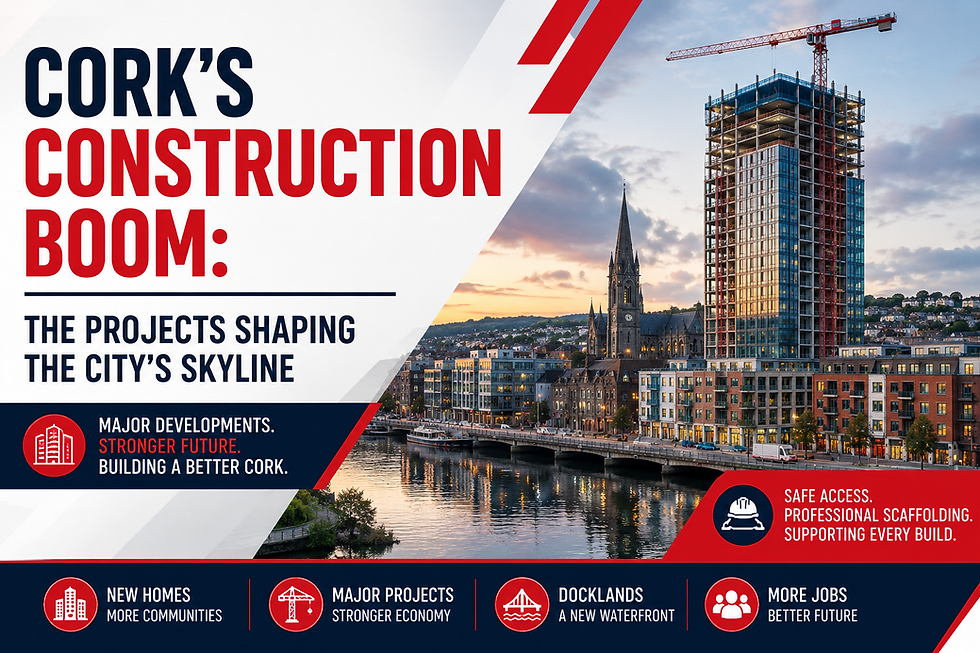
Cork construction in 2026 is entering a genuinely busy period. New housing, infrastructure and regeneration projects are creating opportunities for contractors right across Cork City and County. But a busy market cuts both ways — tighter schedules, stretched resources and more competition come with it. If you work in construction, knowing where the investment is heading can help you plan your next move before everyone else does.
The challenge is that opportunity on its own doesn't guarantee a good outcome. Delays, labour shortages, rising material costs and poor coordination can eat into your margins and your programme fast. Understanding what's driving Cork construction in 2026, and planning your specialist services early, puts your business in a stronger position for the work ahead.
Why Is Cork Construction Growing in 2026?
Cork is being positioned as one of Ireland's key growth centers, with housing, infrastructure and regeneration all feeding into the current level of activity. Industry leaders at the CIF Southern Construct Summit 2026 pointed to Cork's role as a national growth engine, while flagging infrastructure, water capacity, grid connections and planning as the factors that will decide how quickly development actually happens.
Housing is a major part of the picture. Cork County Council has set up a framework for large-scale social housing projects valued at more than €5 million, with an estimated framework value of €250 million and provision for modern methods of construction.
For local contractors, that means a wider pool of potential work. You may not be bidding for the main contract, but major developments still need specialist trades, equipment suppliers and subcontractors right through the build.
What New Housing Projects Are Driving This?
The Cork construction pipeline for 2026 includes both large developments and smaller schemes, so there's work at different levels of the market. One current example is a 22-apartment residential development at Skehard Road in Mahon, where a contractor is being sought for detailed design and construction.
There's significant activity outside the city too. In Bishopstown, a development led by Bridgewater Construction is planned to deliver up to 410 homes across several phases — 164 homes in the first phase, with a further 246 planned for the next.
This kind of scale creates demand well beyond the main building contractor. Groundworkers, roofers, electricians, plumbers, painters, landscapers and scaffolding contractors all have a role to play as a project moves from foundations through to completion.
How Can Smaller Contractors Benefit from Cork Construction in 2026?
You don't need to land a €50 million contract to benefit from what's happening in Cork right now. Large developments run on networks of smaller businesses supplying specialist skills, equipment and services exactly when they're needed.
The key is spotting projects early and understanding where your services fit. If you wait until a development is already in full swing, the main contractor's subcontractor network is often already in place — and you've missed the window.
Where Will Infrastructure Create More Construction Work?
Housing can't grow without the infrastructure to support it. Roads, drainage, water services, public transport and other essential facilities often determine whether land is even ready for development.
Infrastructure was a major theme at the CIF's 2026 discussions on Cork's future, with industry representatives flagging water and wastewater capacity, grid connections and transport access as the key enablers of housing and wider development.
That gives contractors another reason to look beyond individual housing schemes. Infrastructure upgrades can unlock further development nearby, creating work across residential, commercial and public projects for years afterward.
What Should Contractors Be Watching For?
Planning applications and public procurement notices are usually the earliest signal of where work is heading. Cork County Council's 2026 framework for large-scale social housing is a good example of how public investment can open up opportunities well beyond a single project.
It's worth watching local authority announcements and tender opportunities directly, rather than relying on word of mouth alone. The earlier you know what's coming, the easier it is to organize labour, equipment and specialist subcontractors ahead of the rush.
How Will New Development Affect Scaffolding Requirements?
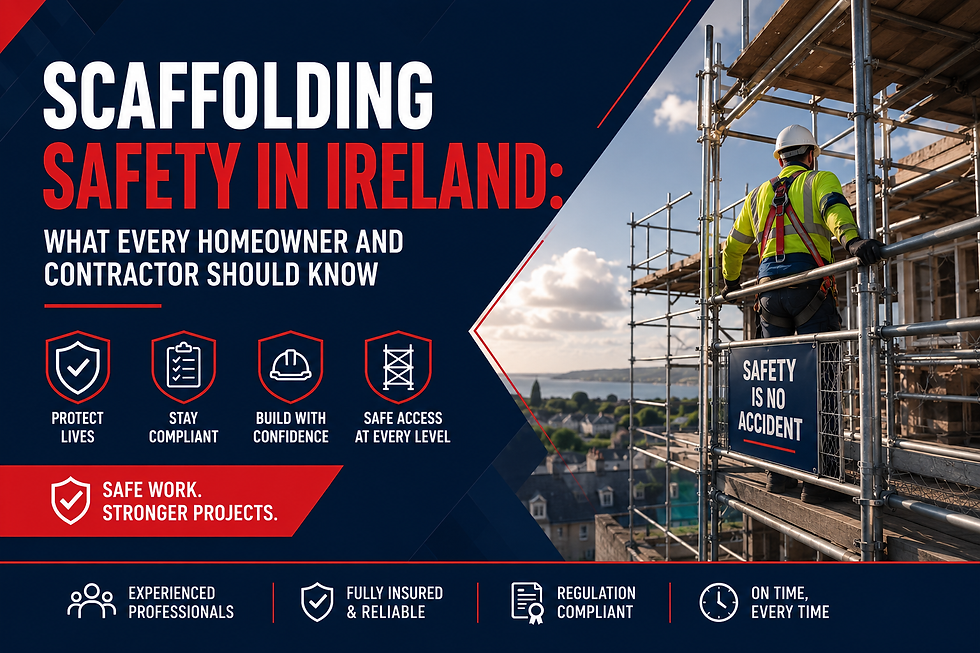
More construction means more work at height, which makes safe access a real part of project planning — not an afterthought. Scaffolding may be needed for new housing, roofing, rendering, painting, external repairs, commercial buildings and renovation work across the Cork construction pipeline in 2026.
The common mistake is treating scaffolding as something to arrange once a project is already underway. If roofers or external trades are ready to go but access hasn't been installed, the programme loses time it usually can't afford to lose.
Before work begins, it's worth thinking through the building's height and design, which trades will be using the scaffold, loading requirements, site access, and the construction sequence. Getting these details sorted early reduces disruption and makes it far easier to coordinate scaffolding with the rest of the programme.
For contractors, reliable access isn't just about getting workers up to height. It needs to support the job safely while fitting around everything else happening on site.
What Safety Issues Should Cork Contractors Consider?
A busier site is harder to manage when several trades are working around the same structure at once. Good access, suitable working platforms and proper planning matter more than ever when work is happening at height.
Scaffolding should be treated as part of your overall site planning, not as a separate piece of equipment to sort out later. The system needs to suit the building and the work being carried out, and installation, use and dismantling all need to be properly coordinated with the rest of the site.
This becomes even more important on projects where the building changes significantly as the work progresses. Access needs at the roofing stage can look very different from access needs during external finishing, so staying in regular contact with your scaffolding contractor helps avoid unnecessary changes and delays.
How Can Rising Costs Affect Local Contractors?
Growth in Cork construction doesn't remove the financial pressure facing Irish contractors. Labour availability, material prices, equipment costs and project delays can all hit profitability, especially on a project already working to a tight programme.
Poor coordination makes those pressures worse. If one trade is waiting on another, equipment sits unused, or a specialist service hasn't been booked in time, you lose time without making any real progress.
Planning ahead helps control some of that risk. Discussing scaffolding, plant, materials and specialist subcontractors early gives everyone more room to coordinate properly, instead of making last-minute decisions under pressure.
How Should Contractors Prepare for Cork's 2026 Development Pipeline?
Start by looking beyond your current project. Follow planning activity, public tenders and local development announcements so you can spot potential work before construction reaches its busiest stage.
Next, strengthen your contractor network. Having dependable specialists on call makes it far easier to respond when a new project lands, particularly when several developments are competing for the same resources at the same time.
It's also worth reviewing how you manage access requirements. If your projects regularly involve roofing, rendering, external maintenance or other work at height, build a relationship with a reliable scaffolding provider before you need one urgently.
And don't make price your only consideration. Experience, insurance, safety practices, communication and reliability all affect how smoothly a project actually runs.
What Does Cork Construction in 2026 Mean for Local Contractors?
Cork construction in 2026 presents real opportunities, particularly across housing and infrastructure. Public procurement is supporting large-scale residential delivery, while individual developments are creating work for contractors and specialist trades right through the supply chain.
That opportunity comes with a clear warning attached. A busy market puts more pressure on labour, equipment, suppliers and schedules, so waiting until the last minute can turn a fairly simple requirement into a real headache.
If your project needs scaffolding, planning access early keeps your trades working safely and your programme moving. Get in touch with Safe Reach Scaffolding to talk through your project requirements and arrange the right scaffolding solution for your construction, commercial or renovation project.

Comments